

The Dates We Don't Puton Our Calendars
Kristina Boxer spent her career sweating details at WeWork and Teachable. Now she's building mmento — a system for the moments a calendar was never designed to hold.
Behind the Story
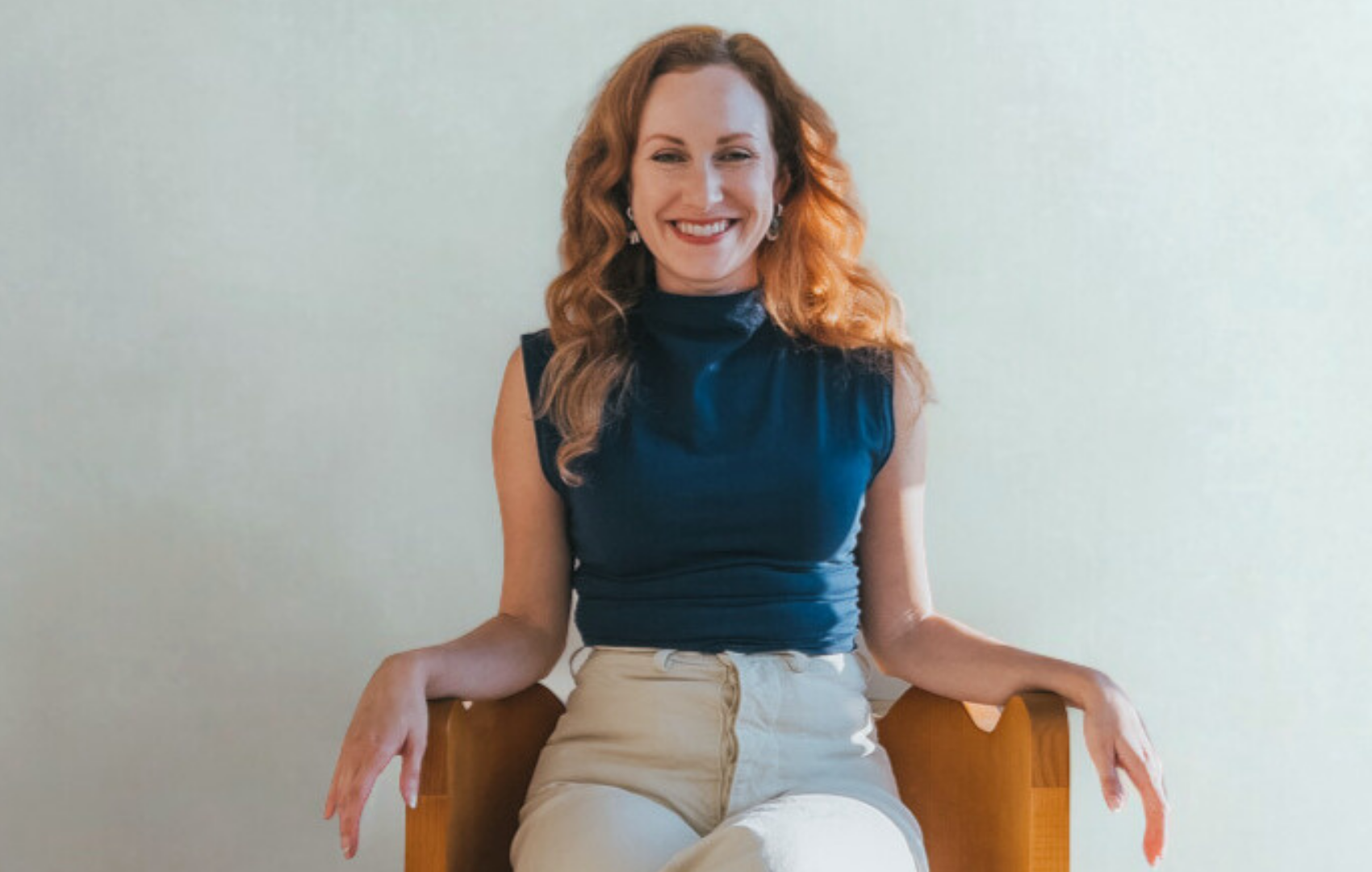

Your calendar knows your dentist appointment. It does not know that this Thursday is the third anniversary of your friend's brother's death.
That gap is where mmento started. Kristina Boxer wanted to show up for a grieving friend every year — not on the day, when everyone remembers, but early enough to actually send flowers from another time zone. There was no reliable way to do it. The dates that matter most are precisely the ones nobody thinks to write down.
She's bootstrapping the fix.
The moments that don't get recorded
Q: Was there a single moment you knew mmento had to exist?
A series of them, really.
I noticed how much we crowdsource — remind me when so-and-so's birthday is, what should I get them? I get asked those questions constantly, because I love giving gifts. And there's legitimate stress in it. Sometimes you have a great idea for someone and forget to write it down. Often you just run out of time.
But the moment I keep coming back to is different. One of my dear friends lost her brother. I knew immediately that I wanted to show up for her around the anniversary each year. And I realized we don't put dates of loss on our Google Calendar. We might remember the day itself — but what if we're not in the same place, or the same time zone, and I want to send flowers or a card? I needed a reliable reminder, in advance.
Could I help people make the thought count more often?
Q: What was the very first thing you built?
Not software. A list.
I started tracking products, artists, small shops, curated websites — anything worth sharing. That became a personal database that's still growing today, a library of thoughtful goods and the makers behind them. Building it let me see patterns: which gifts land, for whom, and when.
mmento is really a scaled version of something I'd been doing manually for years. Finding meaningful things, and connecting people to them, and through them to each other.
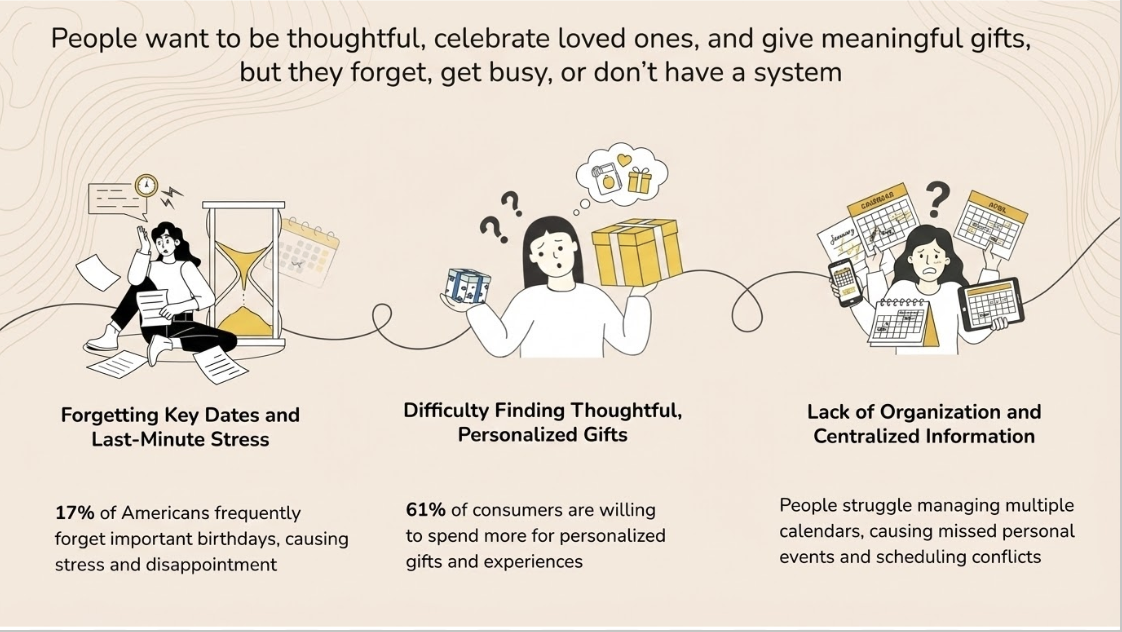
The moments that inspired mmento
Seventeen football fields of details
Q: Your path here wasn't linear.
Not at all, and that matters to the story.
At eleven I was convinced I'd be a restaurateur, so most of my early career went into learning that business in Austin. I touched every role except cooking. I'm an operations person — optimizing the experience, the margin, the service, supporting the team running the show. That's where I was good.
What restaurants taught me is that I'm a person of detail. I sweat the small stuff in pursuit of the greater good.
I carried that into tech and workplace experience in New York, running customer and employee experience teams. By the end of my time at WeWork, my team was responsible for over a million square feet of office space. That's roughly seventeen football fields of details to care for.
Q: And the entrepreneurial instinct?
Planted early. Like a lot of millennials I collected beanie babies — and tracked the financials in a spreadsheet. Later I was tracking P&Ls for other people's businesses. The thread was always the same: attention to detail, and caring how a company shows up.
Here's the tension in that, though. In plenty of environments, that level of intentionality slows things down. It gets treated as friction.
So the question became: if I believe details matter, how do I make them easy? Not more virtuous, not more effortful — easier. That's the whole product.
Utility and warmth
Q: What are your differentiators?
For most businesses I admire, the differentiator starts with who built them. My eye for detail, my commitment to hitting the mark, my belief in showing up intentionally — those shape the experience. When people use mmento they're trusting my taste, but they're also empowered to send something thoughtful without friction.
Most apps are either purely functional or purely social. mmento is both. It has real utility and it's human-centric, and it plugs into what people already use — calendar and email, with more to come.
I'm also inspired by older generations who kept meticulous notebooks of birthdays, anniversaries, and gifts they'd given. mmento is a modern way to carry that forward.
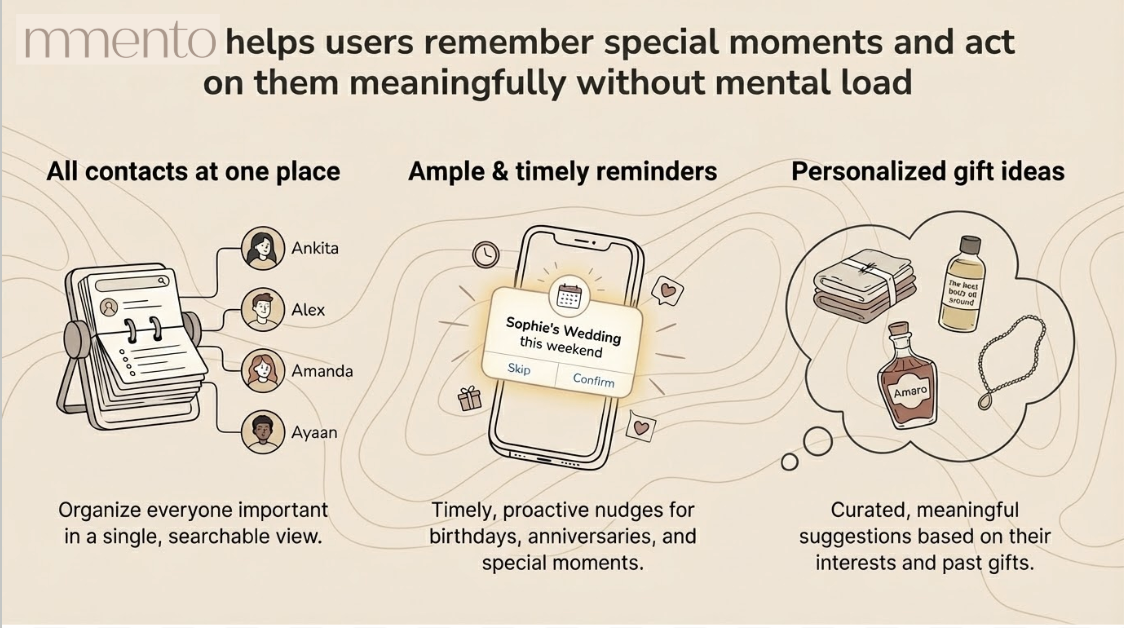
How mmento helps you show up on time
Q: A milestone you're proud of?
Sales and marketing aren't my strengths, so some of the earliest sign-ups came from just talking to strangers — at SXSW, at networking events, anywhere I could explain what mmento was. Those conversations were the real validation.
Then the beta. I wrote an introductory email explaining the value and how to use it, and sent it to everyone at once. That was an enormous amount of work for what's nearly a one-woman show. Clicking send was elating. Shipping something you made and handing it to a real audience is one of the great highs of this job.
Knowing what to hand off
Q: How did you work out what you're best at?
I used the people closest to me as mirrors. Over the years I paid attention to what colleagues, managers, and teammates consistently reflected back at me. Later I worked with a business coach, which sharpened it further.
Building a company means there will be things you're simply not good at. The tell is foot-dragging — find the work you keep avoiding, and that's your outsourcing list.
Q: And then?
Then you discover how hard it is to actually find good help. I was spending hours searching, recruiting, and interviewing to fill a single part-time contract role. That's a brutal ratio when you're one person.
What changed it was getting access to a vetted pool — through The Club I ended up working with students who were genuinely excited to solve real problems at mmento, and they shaped parts of the business I couldn't have built alone.
Alongside that I keep building an advisory circle: people I trust to challenge me. Hands-on help plus seasoned guidance is the combination that works.
What shouldn't be automated
Q: Advice for founders navigating AI right now?
Naval Ravikant makes the point that AI won't replace programmers so much as let programmers replace everyone else. Programmers are just the example — AI fills gaps for all sorts of professionals, and it's on us to stay current with what it can do.
But I also believe the collective we decides what gets built and what gets prioritized. My business is specifically about human connection and nurturing people on time. AI might help us do that more efficiently. It will never replace the human element — unless we let it.
That distinction is the one I'd hold onto. Automate the remembering. Never automate the caring.
Doing it your way
Q: Advice for someone about to start?
Now is the time — and this takes patience. Both are true.
You'll have your own groove, and you don't have to perform the move-fast-and-break-things thing. Anyone who's worked with me knows I'm a recovering perfectionist; my problem is the opposite one, wanting everything just right before I share it. But you have to do it your way, and what you build will be better for it.
The other thing: track your progress. Not just wins — failures too. I spend a few minutes at the end of each day writing down what I did and what's top of mind for tomorrow. It's so simple it barely seems worth the time, and it's made all the difference in staying focused and being able to see my own patterns.
Do it your way.
Q: What's next?
A paid plan with advanced features like calendar integration and sharing, plus a promo for the first annual subscribers. I want to do my part to make sure the handwritten card never becomes a lost art, and I have plans for how mmento can help with that.
I'm also exploring the personal shopping side, which I'm genuinely passionate about — helping people hit the mark in how they show up for others and themselves.
And integrations. So many of the moments we want to remember — birthdays, anniversaries, even dates of loss — already exist online somewhere. Capturing that seamlessly is the next real unlock.
If you know someone who'd want to work on this, send them my way. I'm especially looking for fresh perspectives on the user lifecycle and overall experience.
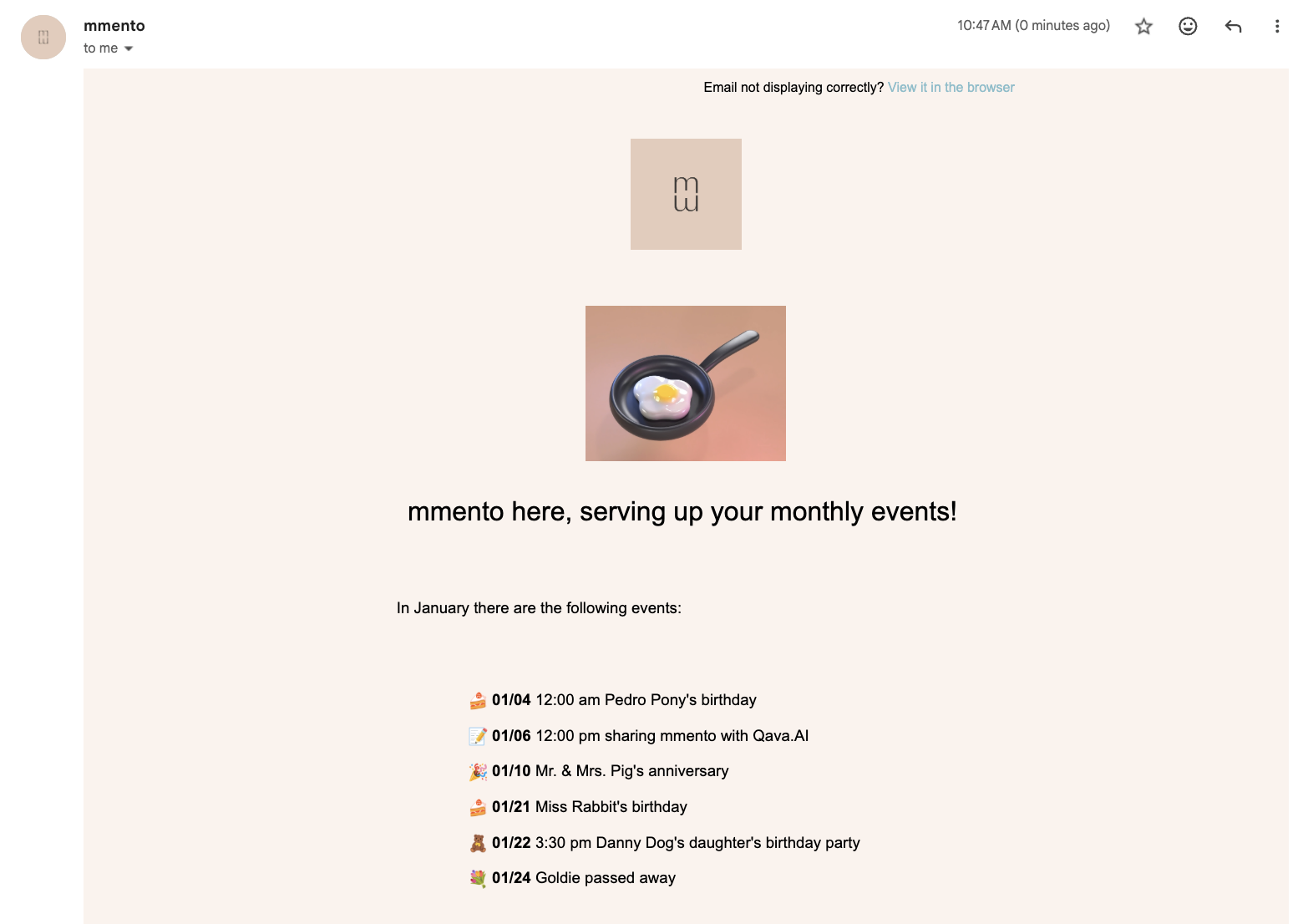
Monthly reminders keep you ahead of the date
Q: Books that shaped how you work?
The Big Leap — Gay Hendricks
We Should All Be Millionaires — Rachel Rodgers
Atomic Habits — James Clear
When: The Scientific Secrets of Perfect Timing — Daniel Pink
And if you read only one: Automating Inequality by Virginia Eubanks. It's a powerful account of how technology determines equity and access. It was groundbreaking for me.
There's a whole class of software built to help you move faster. This is one built to help you not miss things — which turns out to be a different problem, requiring the opposite temperament.
The detail Kristina keeps returning to isn't the gift. It's the timing. Showing up on the right day, from the right distance, without being asked. That's a small thing that people remember for years, and almost no tool is designed for it.
Start building something that matters.
mmento helps people show up for each other, thoughtfully.